
Search

Kayode Olorundare
Governor Aiyedatiwa of itOndo is expected to be declared as the winner of the 2024 gubernatorial election in Ondo. In the ruling expected on Wednesday the tribunal' judgment is being expected.
HOUSE DISAGREES WITH PATEL OVER RESCUE MISSION

Kash Patel, the FBI director nominee nominated by President Donald Trump, said that the U.S. SEAL Team Six saved a kidnapped American citizen held captive in northern Nigeria in under sixty seconds.
This was said by Mr. Patel on January 30, 2025, at his confirmation hearing before the US Senate. His involvement in the covert operation to free Philip Walton, the 27-year-old son of American missionaries who had been abducted by armed bandits from neighboring Niger and taken to northern Nigeria for ransom, was the subject of intense questioning. On Thursday, Mr. Patel told the U.S. Congress, "The operation lasted for 60 seconds." He was also questioned about his apparent negligence in repeating a fictitious authorization that the SEAL Team Six had received from the Nigerian authorities to operate in Nigerian airspace.
Having gathered knowledge of the area where Mr. Walton was being held, Mr. Patel was the driving force behind the rescue effort. Since the bandits may relocate Mr. Walton, he saw an opening for the Seal Team Six to attack. Senior U.S. authorities discovered that the Nigerian government had not yet given the Navy SEALs permission to enter their airspace, much less land, while the plane was in midair carrying operatives. In his memoir, former Defense Secretary Mark Esper stated that it was one of Mr. Patel's many mistakes and that he was worried about the SEALs, especially if they would be shot down for the unauthorized operation.
Mr. Esper's memoir, which described the operation, said, "I was worried that being crammed into an aircraft burning holes in the sky for an additional hour or so would wear on the special operators, that it might affect their readiness somehow." According to Mr. Esper, the SEALs suspected Mr. Patel of falsifying the clearance that the Nigerian government granted them. Mr. Esper writes, "My team suspected Patel made up the approval story, but they didn't have all the facts." In his book "Government Gangsters," Mr. Patel denied the accusations, saying that some individuals attempted to thwart the president's plans by putting obstacles in the way of counterterrorism operations in the Middle East and Africa.
After the State Department stepped in and moved quickly to secure airspace approval from the Nigerian authorities before the Navy SEALs landing, the operation ultimately proved successful. It's unclear if Mr. Patel's responses to the questions were satisfactory, and he has encountered a lot of resistance in his pursuit of the FBI directorship.
BURKINA FASO, MALI, AND NIGER WITHDRAW FROM ECOWAS PERMANENTLY

Following military takeovers in Burkina Faso, Mali, and Niger, the Economic Community of West African States (ECOWAS) has formally suspended the three nations from the regional group. ECOWAS declared that people of the impacted countries would continue to have the freedom to travel around its member states despite the suspensions. ECOWAS's position on the unconstitutional transfers of administration in the region was emphasized by the decision, which was approved during a bloc meeting.
Free mobility guarantees that citizens can continue to travel, live, and trade within the bloc without hindrance, even while the suspension restricts the three nations' ability to participate in ECOWAS activities. ECOWAS has emphasized its commitment to democratic administration and constitutional order by continuously denouncing military takeovers in its member states. While taking steps to lessen the impact of the suspensions on regular residents, the bloc is nevertheless advocating for a restoration to civilian governance in Burkina Faso, Mali, and Niger.
MAN ABOUT TO GIVE UP ON HIS SEARCH FOR HIS HARD DRIVE THAT CAN FETCH HIM 742 MILLION DOLLARS
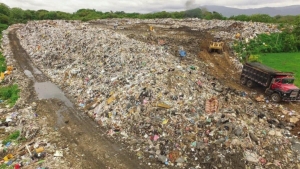
In 2013, James accidentally chucked out the hard drive that held his treasure trove of Bitcoins. At that point, they were already worth around 8 million dollars. But today? We’re talking about an insane 742 million dollars! This mishap went down in Newport, South Wales, and now that hard drive is supposedly lying under 10,000 to 15,000 tons of trash at a local dump. The financial hit for Howells is massive. What once looked like a smart move turned into a dream buried deep under piles of garbage. Yet against all odds, he kicked off an ambitious plan to dig up his lost wealth.
James was determined to recover what he had lost, but he encountered significant obstacles when looking for his discarded HDD in that dump. Every time he asked to dig around Newport, local officials would keep turning him away because they were concerned about potential health hazards and environmental problems (you know how it goes). According to UK ecological regulations, any garbage disposed of in a landfill is officially the property of that location. It might release certain harmful substances into the environment if it is dug up. James never obtained the necessary permit to begin digging lawfully. But he had huge plans: he would methodically go over around 2,000 square meters of landfill site with the help of skilled teams and drones and robots. It has the sound of something from Hollywood!
When a British judge said in 2024 that there was "no realistic prospect" of James recovering his HDD, the situation took a different direction. In addition to discussing environmental issues, the ruling noted that it had been over six years since 2013, which meant that the statute of limitations had gone and that no legal action could be taken. He would still have to overcome significant technological obstacles even if his search party was approved. Even if a hard drive is located, there is no assurance that it will function or contain data that can be recovered because hard drives aren't exactly known for surviving long periods or harsh environments.
Given the accumulation of these setbacks, James felt compelled to express his annoyance at what he perceived to be the inflexibility of the British court system in providing adequate consideration to his case. He chastised their hesitation while acknowledging that his dreams might remain concealed beneath heaps upon mounds of worthless, plain old stuff that are now resting silently underground forevermore unless someone steps in, whether it be the authorities or the courts. Howell finds himself resigned today, knowing that despite years of chasing hope that was only met with disappointments rather than success stories from others who struck gold during cryptocurrency booms around the world, something priceless but likely unachievable is still within reach someday, perhaps in a different location.
BILLIONAIRES FLOCK TRUMP'S INAUGURATION

Four of the five richest men in the world were among the prominent billionaires who attended President Donald Trump's inauguration Monday morning, with a combined net worth of $1.2 trillion. Many of them were hoping to deepen their relationship with the pro-business president as he assumed office.

The three richest people in the world attended several inauguration morning events: Elon Musk ($433.9 billion), the CEO of Tesla, Mark Zuckerberg ($211.8 billion), and Jeff Bezos, the founder of Amazon (worth $239.4 billion, according to Forbes), who spent more than a quarter of a billion dollars to help Trump win the November election. Along with billionaire donor Miriam Adelson ($31.9 billion) and former Fox News Chairman Rupert Murdoch ($22.2 billion), OpenAI CEO Sam Altman ($1.1 billion) and Apple CEO Tim Cook ($2.2 billion), who contributed to the inauguration, were in the Capitol Rotunda Monday morning.
The richest person in France and the leader of the LVMH Moët Hennessy Louis Vuitton luxury company, Bernard Arnault ($179.6 billion), attended the inauguration with his son, Alexandre. The richest man in India, Mukesh Ambani ($98.1 billion), was said to have attended inauguration ceremonies. Trump's pal Phil Ruffin, a $4.7 billion casino mogul from Las Vegas, was also seen at the Capitol.
Vivek Ramaswamy ($1 billion) and Howard Lutnick ($1.5 billion), two billionaires and their spouses who attended the inauguration, have been offered prominent positions in the Trump administration. According to Bloomberg, Coinbase CEO Brian Armstrong ($12.8 billion) had not yet been spotted at the swearing-in but was invited to inauguration-related parties.
Several billionaires, including Stephen Feinberg ($5 billion), Warren Stephens ($3.4 billion), Jared Isaacman ($1.9 billion), Steve Witkoff ($1 billion), Linda McMahon (wife of $3 billion Vince McMahon), and Kelly Loeffler (wife of Jeff Sprecher, worth $1.1 billion), have also received offers of positions in the administration, though their attendance was not confirmed. Together with Adelson, Tilman Fertitta ($10.2 billion), and Todd Ricketts—whose father, J. Joe Ricketts, and family are estimated to be worth $4.2 billion—Zuckerberg co-hosted a pre-inaugural Ball reception for Trump.
Others either stayed out of the presidential contest or were Trump opponents before they attempted reconciliation, while some did back Trump's campaign. Before he fell in line after the election results, Trump allegedly vowed to put Zuckerberg in jail and had been banned from Instagram and Facebook by Zuckerberg's Meta. Since then, Zuckerberg has met with Trump at Mar-A-Lago, paid $1 million to his inauguration fund, changed the way its platforms verify content, and appointed Trump friend Dana White to Meta's board. Zuckerberg referred to Trump's response to his assassination attempt as "badass" in the run-up to the election, but he did not support any candidate.
Bezos and Trump have also had a history of disagreements. In 2019, Amazon accused Trump of losing a multibillion-dollar cloud computing contract with the Pentagon because of his "personal dislike" of Bezos, and Trump has been critical of the Washington Post, which Bezos owns. Bezos gave $1 million to the inaugural fund and stated that Trump "showed tremendous grace and courage under literal fire" during the assassination attempt, despite not endorsing him last year. He has always had the backing of others. Along with Adelson, the widow of billionaire Sheldon Adelson, the CEO of Las Vegas Sands, who gave $100 million to the pro-Trump super PAC Preserve America during the election, Musk is one of Trump's largest donors. The owner of Landry's restaurant chain and the Houston Rockets, Fertitta, has been nominated to be the U.S. ambassador to Italy.
Last year, Billionaires held a Trump fundraiser. Co-owner of the Chicago Cubs Ricketts has been a significant contributor to Republican political campaigns. Although he first gathered money for Trump's campaign within the party, he later led pro-Trump fundraising in 2020 and this year.
Over $170 million. According to estimates, Trump's first fund raised that amount, nearly tripling the $62 million raised by President Joe Biden four years prior and significantly surpassing the previous record of $107 million established by Trump's 2016 inauguration. According to reports, donors who contributed $1 million or raised $2 million from others received six tickets to several events in the days preceding the inauguration, such as a black-tie ball and a "candlelight dinner" with Trump and Melania Trump.
WHAT IS GOING ON BEHIND THE SCENE AT TESLA?

Elon Musk's abrupt dismissal of the Tesla Supercharger team left many wondering: what's going on behind the scenes? Please find out how this daring move could change Tesla's future and what it means for its ambitious expansion plans. Elon Musk's surprising decision to fire the entire Tesla Supercharger team was part of a larger cost-cutting plan, but still, it put one of the company's fastest-growing divisions on hold. The move had significant repercussions for stakeholders and customers who depend on Tesla's charging network and shook the company.
This story was published on May 21, 2024, just over a week after the termination. Rebecca Tinucci, the chief of the Supercharger department, was among the more than 500 workers who were let go. This abrupt shift put a snag in Tesla's expansion plans at a very important moment, bringing all new charging station installations to a grinding halt. It demonstrates just how difficult it can be for businesses to balance expansion with financial objectives. Elon Musk swiftly changed his mind after realizing that his choice might have been a little rash and brought certain members of the Supercharger team back on board.
He understood how important they were to maintaining the health of Tesla's ecosystem. North American freight director Max de Zegher was one of those rehired. However, they have not disclosed the precise number of persons who were able to reclaim their positions, so we are left to speculate as to how much ground they have won in that area.
In addition to these personnel adjustments, Musk announced a substantial investment of $500 million to expand Tesla's network of Superchargers! This large expenditure demonstrates his continued commitment to expansion, even despite previous indications on his X profile that he was slowing it down. Musk is known for his ability to quickly adjust when conditions or market demands change. The team behind Tesla's Supercharger used their X account to express gratitude to suppliers and partners for sticking by them through this difficult time with project deadlines and payments.
Their analysis suggests that these unforeseen organizational upheavals may pose problems in collaborations and completing tasks. Elon Musk has experience with similar tactics; at Twitter, he implemented huge layoffs followed by rehires. Strangely enough, even though these kinds of decisions may appear chaotic within the organization, they originally helped Tesla's stock rise, demonstrating that investors still have faith in Musk's long-term strategy despite the short-term upheaval.
After all of this commotion, it's obvious that people from all other businesses are talking about Elon Musk's leadership style. His audacious actions frequently spark discussions about how businesses should be governed and operated in extremely fast-paced industries where technological innovation is the driving force. Anyone following Tesla's turbulent journey or interested in the workings of corporations under well-known executives like Elon Musk will find this story serves as another reminder of how quickly things can change depending on executive decisions and how important it is to stay informed to understand broader market trends and their implications for all of us.
THE TEN MOST POPULATED CITIES IN THE WORLD

The 10 most populous cities in the world. The population of Tokyo is 37,435,191. Delhi (29,399,141 people) Shanghai (26,317,104 people) Sao Paulo (21,846,507 people) The population of Mexico City is 21,671,908 The population of Cairo is 20,484,965. The population of Dhaka is 20,283,552. Mumbai (20,185,064) is home to The population of Beijing is 20,035,455. The population of Osaka is 19,222,665.
With over 38 million people living in its thriving metropolitan region, Tokyo will continue to hold the top spot in the world's population rankings in 2024.
The capital of Japan remains the world's most populous metropolis, according to 2024 statistics. One of the world's most densely populated areas is the Tokyo metropolitan region. With more than 38 million inhabitants, Tokyo is the biggest metropolis in the world. Osaka, another large Japanese city, is home to around 20.5 million people.
According to United Nations data, Chinese cities also dominate the top ten list. With 1.4 billion people living there, China has many cities with populations in the millions. London, which is far outside of the top 20 cities in the world, dwarfs the cities of Europe.
With populations of 25 and 22 million, respectively, Shanghai and Beijing, China and India, on the other hand, rank highly. Mumbai, which has a population of over 21.5 million, and Delhi, which has 27 million, are two other populated cities in these nations.
Large populations can also be found in Egypt's Cairo (almost 19.5 million), Argentina's Buenos Aires (nearly 15.5 million), and Mexico City (more than 21 million).
NIGERIA TO MAKE MORE FROM CRUDE OIL
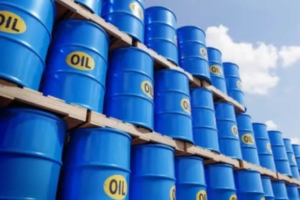
Nigeria, the biggest producer of crude oil in Africa, has declared plans to boost its current output from 1.8 million barrels per day to three million barrels per day by 2025. The nation produced about 1.4 million barrels of oil in 2023, but this year's production reached 1.8 million due to persistent military action against oil theft, pipeline destruction, and the crackdown on illegal refineries.
Nigeria launched the second phase of Operation Delta Sanity II (OPDS II) in Port Harcourt on Monday in an attempt to meet its goal.
Speaking during the introduction, Heineken Lokpobiri, Minister of State for Petroleum Resources (Oil), stated that the Nigerian Navy had moved forward with the second phase of the OPDS since the first phase, which was introduced on January 10, had helped to enhance production figures. Nigeria produced just one million barrels of crude oil per day in August 2023. At the moment, the country produces roughly 1.8 million barrels per day. "We are certain that the second phase of the OPDS will be crucial in reaching our goal of three million barrels per day by 2025," Lokpobiri stated. He emphasized the Nigerian Navy's crucial role in maintaining security and said it would keep working with other security organizations to fight pipeline theft and oil theft.
Lokpobiri voiced alarm about the ongoing sabotage of the Trans Niger Pipeline despite these attempts. Criminals breaking into pipes to siphon crude oil continue to pose a serious threat to the Trans Niger Pipeline.
But, based on its achievements in 2024, the Nigerian Navy has promised to step up its efforts to safeguard these national assets," he said. By stressing the possibility of higher government revenue and better distributions to states and local governments, the Minister emphasized the wider ramifications of reducing oil theft. He urged traditional leaders, marine contractors, security agencies, and young people in the area to assist the Navy in its endeavors. Vice Adm. Emmanuel Ogalla, the Chief of Naval Staff, was upbeat about the likelihood of achieving the three million barrels per day production goal.
According to him, Operation Delta Sanity was created especially to combat maritime crimes such as pipeline damage and oil theft while maintaining a safe environment for lawful operations. The OPDS's first phase resulted in the dismantling of multiple illicit refining facilities in the Niger Delta and the arrest of multiple vessels and oil thieves. "Several oil companies reported 100 percent terminal factor, and these measures significantly improved legitimate maritime activities and increased crude oil production," Ogalla said. Ogalla clarified that despite these achievements, the navy recognized the need to improve the operation to attain even greater results.
Rejigging the mission entails deploying improved intelligence-gathering equipment, assault helicopters, armed drones, and recently obtained marine domain awareness infrastructure. As instructed by President Bola Tinubu, he continued, "We are also incorporating non-kinetic approaches and strengthening collaboration with relevant stakeholders to sustain and increase crude oil production beyond 2 million bpd." By 2025, Ogalla was confident that the OPDS II would further stabilize Niger Delta oil and gas operations.
The achievements of the first phase of the OPDS were detailed by Eastern Naval Command's Flag Officer Commanding, Rear Adm. Saheed Akinwande.
He stated that 215 people had been arrested, 468 illegal refineries had been destroyed, and around 6.5 million liters of stolen crude oil and seven million liters of contaminated diesel had been seized. Akinwande said, "Among other things, 26 vessels were captured, 1,107 dugout pits, 279 storage tanks, and 361 wooden boats were deactivated."
FEMI FALANA SPEAKS ON NIGERIA REFINERY UNDER YA’ARADUA'S GOVERNMENT
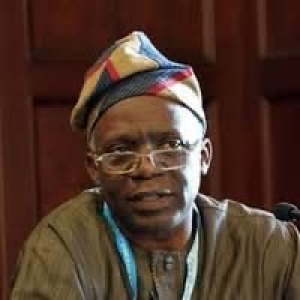
WHY PRESIDENT YA'ARADUA CANCELED THE SALE OF PORT HARCOUT REFINERY TO DANGOTE Written by Femi Falana The National Council on Privatization (NCP), which is tasked with supervising the privatization and commercialization of state businesses, is chaired by the vice president by the Privatization and Commercialization Act. Vice President Atiku Abubakar was sidelined by President Olusegun Obasanjo, who took over the privatization of several state companies in flagrant violation of the Act. For US$561 million, President Obasanjo sold Bluestar Oil a 51 percent share in the Port Harcourt refinery on May 17, 2007.
Another transaction occurred on May 28, 2007, when President Obasanjo sold 51% of the Kaduna Refinery to Bluestar Oil for $160 million. Bluestar Oil was a group of three domestic companies, including Dangote Oil, Zenon Oil, and Transcop. Before the transaction, President Obasanjo had obtained large shares of Transcorp through "blind trust." Since the sales were completed in the final days of the Obasanjo Administration, many interest groups in the nation questioned their legality and morality.
On the grounds of conflict of interest and lack of due process, the two influential trade unions in the oil sector, the Petroleum and Natural Gas Senior Staff Association of Nigeria (PENGASSAN) and the National Union of Petroleum and Natural Gas Workers (NUPENG), opposed the privatization of the two refineries.
Additionally, they claimed that the country had been underpaid because the $516 million shares in the Port Harcourt refinery were worth $5 billion. Both unions went on a 4-day strike in June 2007 that nearly shut down the Nigerian economy because they believed the agreements were not in the country's best interests. The federal government's promise that the transactions would be thoroughly examined led to the cancellation of the strike.
Following the federal government's investigation, President Umaru Yar'adua canceled the alleged privatization of the refineries at Port Harcourt and Kaduna. The cancelation of the privatization was carried out in violation of both the letter and the spirit of the Privatization and Commercialization Act, and as a result, it was not challenged in any court.
In response to the increasing push for the privatization of the country's refineries, the Alliance on Surviving COVID and Beyond (ASCAB) officially urges NUPENG and PENGASSAN to step up their long-standing fight. It is recommended that those who are waiting for the refineries to be privatized in a way that is contrary to the interests of the country establish their refineries, similar to the Dangote Group. SAN Femi Falana,
TRUDEAU RESIGNS
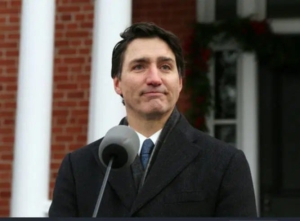
On Monday, Justin Trudeau, the prime minister of Canada, announced his resignation. After months of declining polls and internal strife, he declared that he would step down as soon as the ruling Liberal Party selected a new leader. After the party chooses its next leader, I plan to step down as prime minister and party leader," Trudeau, who has held the position since 2015, told reporters in Ottawa. This comes after a lengthy political crisis during which prominent Liberal supporters urged him to resign. The duration of Trudeau's tenure as a caretaker premier was not immediately apparent.
How I became a tarot therapist and Shalom Dogoh spiritualist after my experience with a pastor "A robust, nationwide competitive process" is how he described the Liberal leadership contest. As a result, Trudeau will remain in charge of Canada when Donald Trump, the incoming US president, assumes office this month. Trump will spearhead Canada's initial reaction to the new US government, which may include a trade war.
The Canadian economy might be severely damaged by Trump's promise to levy 25% tariffs on all imports, and Trudeau has threatened to retaliate. Trudeau, aged 53, was not a prominent political figure before assuming control of the Liberal Party in 2013. The fact that his father, Pierre Elliott Trudeau, had served as one of Canada's most well-known prime ministers was perhaps his most notable political characteristic at the time. However, Trudeau's youthful enthusiasm and familiarity with topics that Canadians were becoming more interested in, such as climate change, enabled him to defeat Stephen Harper, a long-serving Conservative prime minister, in the 2015 elections.
Last year, Trudeau's standing inside the Liberal Party started to wane after more than nine years in office. After his former deputy prime minister and finance minister, Chrystia Freeland, abruptly resigned in December, it fell to unprecedented heights. In a bitter resignation letter, Freeland charged that rather than stabilizing Canada's finances in front of Trump's anticipated tariffs, Trudeau was concentrating on political ploys to win over voters, such as a pricey Christmas tax holiday. The opposition Conservatives are leading Trudeau's Liberals in the polls.
He acknowledged on Monday that he wasn't the most qualified person to guide the Liberals into this year's mandatory election. "This nation deserves a genuine choice in the upcoming election, and I've realized that I can't be the best candidate if I'm fighting internal conflicts." Canadian media have suggested Freeland and former Bank of England governor Mark Carney, a Canadian who also managed the Bank of Canada, as potential candidates to lead the Liberal Party.
Many more are anticipated to enter the race. According to Dalhousie University political science professor Lori Turnbull, a Liberal leadership contest typically takes four to six months, but this time "they've got to be quicker than that." Pierre Poilievre, the head of the Conservative party, said he was prepared to face anybody the Liberals nominated. After Trudeau's announcement, he wrote on X, "Every Liberal MP and Leadership contender supported EVERYTHING Trudeau did for 9 years, and now they want to trick voters by swapping in another Liberal face to keep ripping off Canadians for another 4 years."
Late last year, the Conservatives introduced three non-confidence votes in parliament, which Trudeau's administration barely avoided. A pact with the left-wing New Democratic Party had kept his minority government afloat, but in December, the NDP declared that they would vote to remove Trudeau as soon as possible. Trudeau affirmed that the governor-general of Canada had given him the go-ahead to halt all legislative proceedings until March 24. That might limit the opposition's ability to introduce a vote of non-confidence while giving the Liberals more time to select a new leader.
ONLY FEW NORTHERN LEADERS FIND TAX REFORM UNPROFITABLE
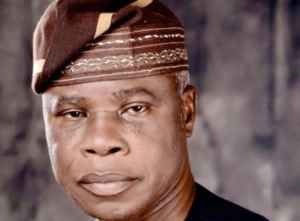
Nigeria is being held hostage by a small group of Northerners; it's time to wake up, says Fapohunda.
Dr. Akin Fapohunda, the secretary of the Eminent Elders Forum, has charged that a small group of northern elites have been keeping Nigeria hostage for more than 40 years due to tribalism and self-interest. When discussing the northern opposition to President Bola Tinubu's proposed tax reform proposals on Sunday on Arise News, Fapohunda argued that the north has been playing a game for too long and that it is time to call their bluff. He claims that although southern Nigerians have been lax in their demands, the North has imposed policies like the federal character and quota system on the southern region.
“It is time for Nigeria to wake up and realize that the interests of the South and the North are not in an alliance.” Speaking specifically about the Tax Reform Bills, the Secretary of the Eminent Elders Forum believed that the proposals could never work because Nigeria is not a unified country and “cannot be unified at all” by a unitary tax system. Fapohuna claimed that such policies have favored the North over the South and that only a few elite people in the North are benefiting from the federal policies at the expense of other citizens of the nation.
"The North can shout Northern interest at the flip of a switch," he remarked. Southerners are easygoing and hope that we are civilized enough to avoid discussing tribalism. We are arrogant about this issue, and tribalism is at work. Look, the North has been playing us for far too long; for more than 40 years, they have imposed federal character on Nigeria. For more than 40 years, they imposed a quota system on Nigeria. Has it been advantageous to them? The only group keeping the entire nation hostage is the small clique in the North. Nigeria has had enough time to realize that the North and South are not together.
The few elites in the North are now speaking as though a feeding bottle were going to be taken away from them. They are shouting and doing just that. They have now established a league called the League of Northern Democrats. During his speech, the governor of Bauchi stated that they would not be able to pay salaries in the future. Look, with this mindset, the North has seriously harmed Nigeria. Which Nigerians are currently japanning? They're from the South. In the 1950s and 1960s, the South made significant investments in education. Nigeria has now forced the products out of the country. Is there a Fulani man who does engineering or medicine in New York or London?
The Yorubas, Igbos, and Southerners are the ones who are marginalized. It is time to confront the North's bluff, not because we agree with Tinubu's actions, but because we need to talk about Nigeria. Nigeria is not—we are pretentious. Let's get down to business. That is why we are calling for regionalization; the North and South are distinct unless we are fooling ourselves.
Nigerians will not be united over this tax issue. If we give the North more VAT, for what purpose? They have had a federal character for forty years; what have they done with it? They have a quota for forty years; what have they done with it? They are simply being spoiled; they do not want to face the fact that they are not performing, and when you compromise, you kill the South. We should be tired of carrying the North along, honestly. Someone has to call their bluff. There is no other option than for the South to call the North's bluff," he continued.
Fapohunda advised President Tinubu to concentrate his efforts on other worthwhile projects, claiming that pursuing the contentious tax revisions is pointless while other problems go unsolved. He asserts that the policy that may propel Nigeria to greatness is not tax reform. "The president is not concentrating in the proper direction," he stated. One thing and only one thing: inheritance tax. Sharia is viewed differently in the North. The customs of the South-West are distinct. The East takes a distinct tack. Isn't it a dead end to try to implement a unitary tax system when everyone has a different way of living?
Regarding that, I won't truly support President Tinubu's efforts based just on the account. To tell the truth, President Tinubu is preoccupied with this tax issue. That will be his administration's catchphrase. What would happen if the tax plan was approved during the next three, four, or five months? On the tax package, Mr. President is risking his political savvy and image, but he is omitting to discuss several problems that he should have encountered. The civil service is in ruins. Civil workers are not functioning naturally with the government; they are merely trying to find a way to make ends meet. According to Orasanye, the president promised to complete it in twelve weeks.
What has happened to the N500 billion agricultural project that the president proposed in 2023? He didn't put it into practice. We now have a ministry dedicated to cattle. I am aware that they are now searching for offices in Abuja. When will the livestock ministry deliver the first cow to us? Therefore, in general, Nigeria should not be concentrating on tax obligations at this time. More significant basic adjustments are in place. We do not want the tax measure to be a reform. We must restructure the nation so that we may all coexist peacefully as neighbors. There is no denying that we are different. From now till eternity, we can ignore it.